Building Living Soil
Healthy plants start with healthy dirt. Here is how we use cover crops and no-till practices to regenerate our Kentucky land.
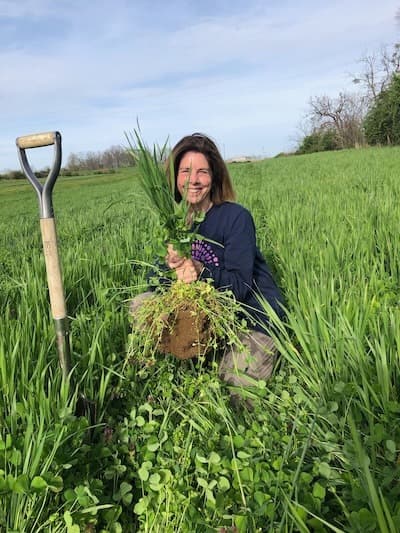
Laura Freeman
Founder & Farmer
At Mt. Folly Farm, we don't just grow crops; we grow soil. Regenerative agriculture is at the heart of everything we do. It’s a philosophy that goes beyond "sustaintable" (keeping things as they are) to "regenerative" (making things better than we found them).
The Principle of "Living Soil"
Soil is not dead dirt. In a single teaspoon of healthy soil, there are more microorganisms than there are people on Earth. This complex web of bacteria, fungi (mycorrhizae), nematodes, and earthworms is responsible for:
- Nutrient Cycling: Breaking down organic matter into food for plants.
- Water Retention: Acting like a sponge to hold water during droughts.
- Carbon Sequestration: Pulling CO2 from the atmosphere and locking it underground.
Our Conservation Practices
To protect this microscopic workforce, we employ several key strategies:
1. Cover Cropping
We never leave our soil naked. In the off-season, we plant cover crops like winter rye (Secale cereale) and crimson clover.
- Prevent Erosion: Their roots hold the soil in place against winter rains.
- Add Nitrogen: Legumes like clover pull nitrogen from the air and fix it into the soil, reducing the need for synthetic fertilizers.
- Suppress Weeds: A thick cover crop creates a natural mat that stops weeds from taking hold.
2. No-Till Farming
Plowing (tilling) creates a visually satisfying "clean slate," but it creates chaos underground. It destroys fungal networks and releases stored carbon into the atmosphere.
At Mt. Folly, we practice no-till farming. We use a specialized drill to plant seeds directly through the residue of the previous crop. This keeps the soil structure intact and the carbon underground.
3. Crop Rotation
We rotate our hemp crops with other organic grains and pastures. This prevents localized pests from establishing a permanent home and ensures that different crops take—and give back—different nutrients to the soil.
Why This Matters for CBD
You might wonder: Does soil health affect my CBD oil?
Absolutely. Hemp is a bio-accumulator, meaning it rapidly absorbs elements from the soil.
- In poor soil: Hemp can uptake heavy metals and toxins.
- In living soil: Hemp uptakes a rich spectrum of minerals, contributing to the "terroir" of the plant and arguably a more complex terpene profile.
When you buy Laura's Mercantile full-spectrum extract, you are tasting the result of years of soil stewardship.
"We treat the soil as an heir, not an asset." — Laura Freeman
Dig Deeper
Interested in our farming methods?
Cultivating Wellness,
Delivered to You.
Sign up for our newsletter to receive exclusive farm updates, wellness tips, and a 15% off code for your first order at Laura's Mercantile.
We respect your inbox. Unsubscribe at any time.